
Digital Logger System for Drilling Data
A field-ready logger system for recording drilling and probe data, then presenting it through a standard PC interface while drilling work is underway.
The system gives drilling teams direct visibility into operating information such as depth, rate of penetration, rotation, pressures, and auxiliary channels. Data can be reviewed during drilling and kept as a useful record after the job is complete.
- Primary use
- Measure drilling process data while work is in progress.
- Operator view
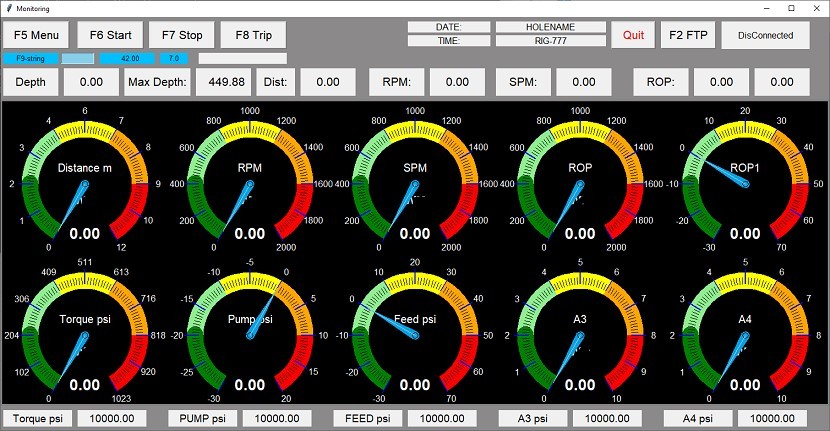
- PC-based dashboard with depth, rotation, pressure, speed, and auxiliary channels.
- Hardware
- Monitor assemblies, rugged input equipment, control enclosures, cabling, and field units.
What the system records
The digital logger records key drilling parameters and probe data so operators can understand the drilling process as it happens.
- Current drill depth and maximum depth.
- Rate of penetration, also known as drill speed.
- Feed pressure, rotation pressure, pump pressure, and auxiliary pressure.
- Rotations per minute (RPM) and strokes per minute (SPM).
- Rotation count measured as half turns over a selected distance.
- Feed force calculated from thrust and holdback pressure.
Measuring while drilling
Measuring while drilling captures real-time data from rig sensors. That information helps operators and engineers see changes in the drilling process, improve consistency, and build a detailed record of the work performed.
The data can support drilling performance optimization, production rate review, tool selection, formation records, strength-versus-depth assessment, and later analysis of operating conditions.
Field hardware and operator interface
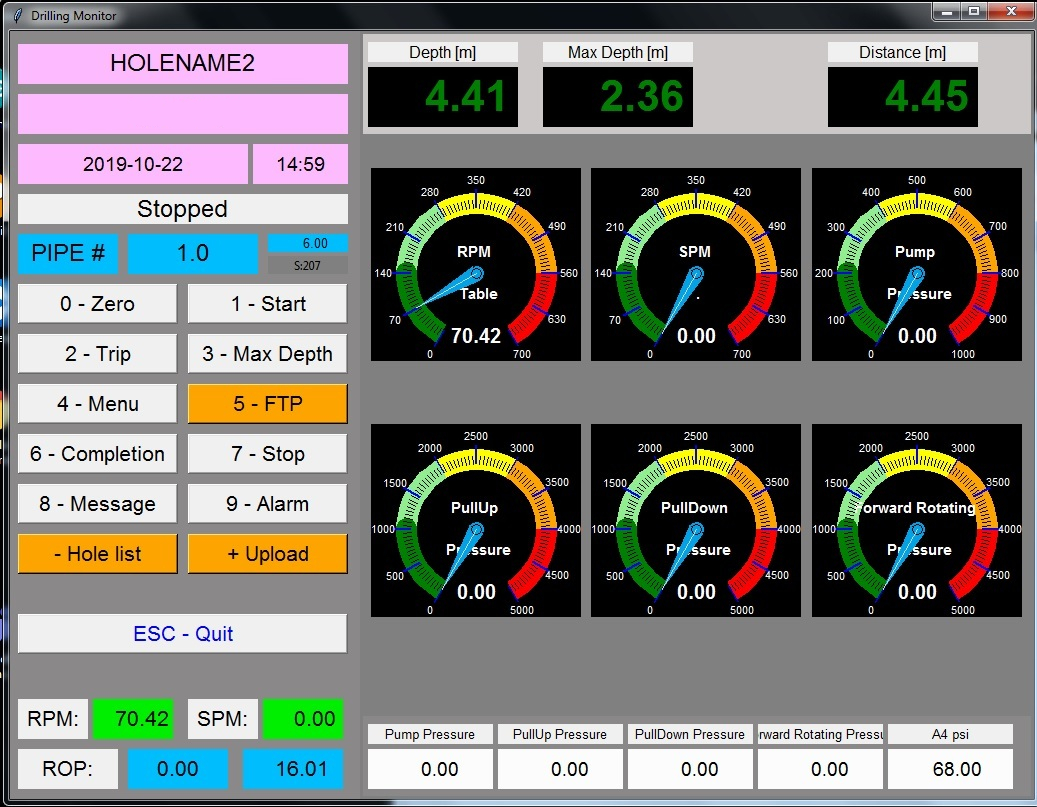
The system is shown as both software and field-installed hardware. The interface presents depth, maximum depth, distance, RPM, SPM, pump pressure, pull-up pressure, pull-down pressure, forward rotating pressure, rate of penetration, and auxiliary pressure values through readable numeric and gauge displays.
Operational uses
Live monitoring
Operators can watch drilling parameters while the borehole is being advanced and respond to changing conditions.
Performance review
Recorded values help compare drilling rates, pressure behavior, rotation, and operating consistency across jobs.
Formation records
Depth-based drilling data can support geological and geotechnical review by preserving a record of encountered conditions.
Historical planning
Past operations data gives planners a stronger basis for estimating future drilling performance and risk.
Monitor examples
Resources
Best fit: drilling teams that need a rugged data logger, live monitor display, and retained drilling process record from field equipment.